




A berth closure, a customs hold-up, a change to pilotage times: port work runs on updates. But not every update deserves the same trust. A forwarded screenshot can empty a warehouse shift or send a truck to the wrong gate as easily as an official notice. The difference is rarely secret knowledge. It is a habit of checking the source, the scope, and the time before acting. For agents, forwarders, hauliers, terminal staff, crews, and local businesses, the practical question is simple: what changed, where, from when, and who confirmed it? A useful second question is just as important: what would I need to see before I repeat this to someone else?
Start with the source, not the headline
Maritime news arrives in layers. The first layer is official: the port authority, harbour master, coast guard, customs authority, and terminal operator notices. These are the sources that can change rules, close water areas, alter berth windows, or set customs procedures. The second layer is operational: shipping lines, ship agents, freight forwarders, pilots, towage companies, and haulage firms. They translate official decisions into what a vessel, cargo, or truck should actually do. The third layer is reporting and conversation: trade press, local news, social media, and the group chat that never sleeps.
None of these layers is useless. A trade journalist may spot a pattern before an official notice appears. A colleague at another terminal may hear about a gate problem before it is posted. But each layer answers a different question. Use official sources for rules and restrictions. Use operational sources for timing and practical effect. Treat conversation as a lead, not a confirmation. If a shipping line says a vessel is expected alongside at 14:00 but the harbour master has closed the berth until 18:00, the operational timetable is useful context, not permission to ignore the closure.
- Port authority and harbour master: navigation rules, berth restrictions, dangerous goods, port closures, notices to mariners.
- Coast guard and customs: safety directions, inspections, clearance procedures, enforcement matters.
- Terminal operator: gate hours, crane availability, yard restrictions, vessel schedules, local access.
- Shipping line, agent, and forwarder: booking changes, cut-offs, documentation, cargo release, re-routing.
- Pilotage and towage: boarding times, movement restrictions, tug availability, and changes to planned manoeuvres.
- Trade press and social media: early signals, context, and questions worth checking.
If a message names no source, that is information about the message, not about the port. “They say the port is closed” is not a status. “The harbour master’s notice 24/xx closes the west basin to all traffic from 06:00 to 10:00” is one. The same applies to screenshots. A screenshot of a message is not the message itself; it can lose the sender, the date, the reply, and the correction that followed. When possible, ask for the original notice, the terminal reference, or the name of the desk that issued it.
Read the notice the way a port professional does
Official updates are often short, and that is fine. The problem is that readers skim them and then repeat the wrong part. Before you act, slow down for four details.
Who issued it, and who is affected?
A notice from a terminal operator applies to that terminal, not the whole port. A harbour master’s notice may cover a channel, a basin, or a single berth. A customs instruction may affect one commodity or one procedure. Scope is everything. “Port closed” and “berth 7 closed for maintenance” are different messages with different consequences. A notice headed “Port of Example” may still be issued by one terminal within it; read the signature, the address block, and the list of affected areas before you brief a driver or a vessel.
When does it start, and when does it end?
Check the effective time, not just the publication time. Look for local time and time zone, especially if you are coordinating with a vessel or office abroad. A notice posted at 08:00 may take effect at 12:00, or it may already be in force. An update may replace only part of an earlier notice; sometimes it is a patch, not a full reset. A message that says “from 06:00 tomorrow” needs a date as well as an hour, and a closure with no stated end time needs a follow-up call, not an assumption that it will last all day.
Is it a rule, a request, or a warning?
Words matter. “Closed” is different from “restricted”. “Advisory” is different from “mandatory”. “Expected delay” is not the same as “suspension”. A strike notice is not necessarily a strike. A weather warning is not automatically a port closure. If the wording is unclear, do not upgrade it in your own message. An advisory about strong winds may mean “consult your pilot” rather than “stop all movements”; the difference matters to a tug operator, a berth planner, and a haulier waiting at the gate.
What is the reference number?
Port notices, customs decisions, and operational advisories usually carry a reference, notice number, or update version. Keep it. When you call a colleague or a terminal desk, the reference saves minutes and prevents confusion. It also helps you check later whether a message has been superseded. Write it in the same place you record the time, the affected berth or gate, and the person who confirmed it. Future you, or the next shift, will need that trail.
If a message cannot answer who, what, where, and until when, it is not an operational update yet.
Watch for the usual rumor patterns
Rumors in port communities rarely look dramatic. They look helpful. Someone shares a screenshot “so everyone knows”. A voice note claims a gate has shut. A photo shows a queue at a terminal. None of those is proof. The patterns repeat because they arrive faster than official communication and feel more human.
- The undated screenshot: no source, no notice number, no time. It may be real, old, or edited. Check the original before repeating it.
- The single anecdote: one driver was turned away, so “the gate is closed”. One vessel waited, so “the port is blocked”. Ask whether the experience is typical, temporary, or limited to one cargo type.
- The old photo: a picture of congestion from another week or another port can travel quickly. Look for visible dates, weather, signage, or the original post.
- The vague authority: “Customs has stopped everything” or “the pilots are refusing”. Which customs office? Which pilot station? Which vessels? A claim that cannot be narrowed is hard to verify.
- The upgraded instruction: a warning becomes a closure; a delay becomes a cancellation; a request becomes a rule. Compare the forwarded message with the original wording.
- The missing context: a photo of a queue at one gate says nothing about the other gates, the cause, or how long it will last. Ask what the picture does not show before you turn it into a plan.
There is a simple test: does the message name a source you can contact, a scope you can check, and a time you can compare? If not, label it as unverified in your own messages. “Unverified: terminal reports a gate delay, checking” is safer than “Port closed”.
Cross-check without wasting the day
Cross-checking is not about calling everyone you know. It is about finding one independent confirmation and one operational detail. Start with the official notice board or authority feed named in the message. If there is no notice, call the terminal desk, agent, or harbour control that would be responsible for the change. Ask a narrow question: “Is gate 4 accepting export containers after 14:00?” is easier to answer than “What is happening?” Compare the answer with the timestamp and scope of the message you received. If two independent sources agree on the same who, what, where, and when, you have enough to act with care. If they disagree, treat the information as unsettled and say so.
A quick routine can save a shift:
- Find the original: open the notice, email, or system message rather than the forwarded copy.
- Check the clock: confirm the effective time, time zone, and whether the notice has been superseded.
- Confirm the scope: identify the terminal, berth, gate, channel, commodity, or procedure affected.
- Ask one operational contact: a terminal desk, agent, pilot station, or haulage coordinator who can confirm practical effect.
- Record what you know: note the source, reference, time checked, and what remains unverified.
This routine takes less time than recovering from a wrong turn, a missed cut-off, or an unnecessary stop-work. It also gives you something valuable to pass on: not a rumor, but a short, checkable update.
Make your own updates easier to trust
Reliable communication is not only about what you receive. It is also about what you send. When you forward an operational update, keep the original source and reference visible, state the scope and timing in plain words, and mark anything you have not confirmed. A message such as “Terminal 2 notice 18/24: gate 3 closed for maintenance 10:00–14:00 today; gate 4 open; confirmed with terminal desk at 09:20” gives a driver, planner, or agent something they can use. A message such as “gate problems, avoid” creates calls, guesses, and delay.
- Keep the original wording for rules and restrictions; paraphrase only the practical effect.
- Use timestamps and time zones so remote teams do not have to guess.
- Separate fact from estimate: “confirmed closure” and “expected delay” should not look the same.
- Say what you do not know: “unverified” is a useful status, not a weakness.
What to do when a message turns out to be wrong
Corrections matter as much as warnings. If a closure is lifted, a gate reopens, or a delay clears earlier than expected, send the update with the same care as the original. If you repeated something that proved false, correct it plainly: what was wrong, what is now confirmed, and which source to check. Port communities remember both the rumor and the correction. A clear correction protects the next shift from acting on stale information and makes your future updates easier to trust.
The standard is not perfection. It is discipline. Check the source, read the scope, compare the time, and keep the reference. When a message cannot meet that standard, label it as a lead and keep asking. In a port, good information does not just arrive; it gets verified, recorded, and passed on in a form that people can act on safely.
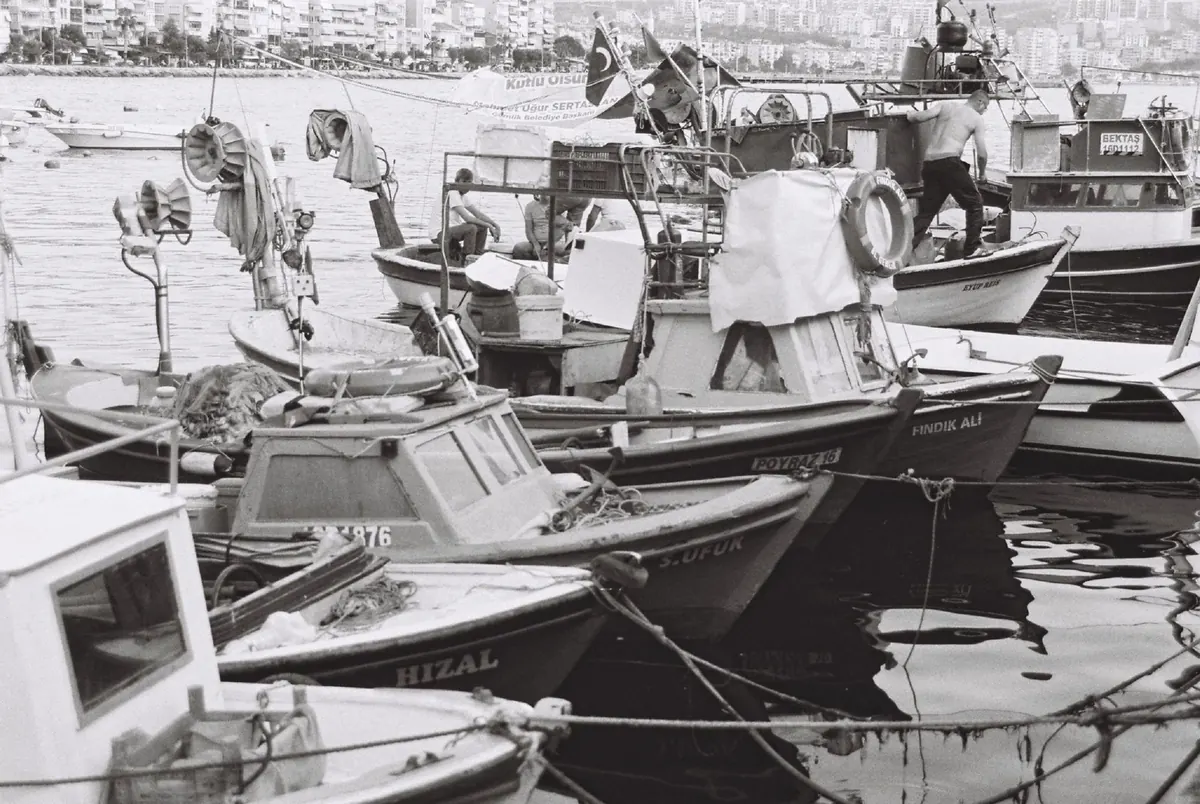
Photo: sweetlouise / Pixabay
Related posts
More stories you’ll love reading