


You can spend a season learning your boat and another one learning your marina. The second lesson tends to cost more. A berth that looked tidy on a bright Saturday in May can become a tight, exposed, tide-dependent squeeze by November, and the quote you were given in spring rarely mentions the difference. Before you compare numbers, it helps to know what you are actually comparing. Work through the six areas below with each candidate marina and the shortlist usually sorts itself out.
Berth Size: Measure More Than the Hull
Berth dimensions are quoted in ways that flatter the marina. A berth listed at 12 metres may be 12 metres of pontoon with a finger that stops well short of your bow, or a box whose width assumes nobody uses fenders. Start with your boat's real footprint: length overall, beam, draft, and air draft if you have a radar arch, antenna array or bimini frame that has to clear anything overhead.
Then add the things builders don't count. An outboard bracket, a bowsprit, davits, a boarding ladder left down, a dinghy on snap davits. A 10.5-metre boat in an 11-metre berth sounds comfortable until you factor in half a metre of anchor roller and a passerelle that needs somewhere to land.
Questions worth asking on the pontoon
- What are the actual usable dimensions of the berth, and can I see the berth number before I commit?
- How long is the finger pontoon, and where are the cleats relative to my bow and stern lines?
- Can I step off amidships, or will I be climbing over a guardrail every time?
- Is there room to swing a fender board or add a spring line without blocking the neighbour?
- Might I be moved to a different berth during the season, and how much notice would I get?
Walk the berth at low tide and in the rain if you can. Space looks different when you are carrying two bags of shopping and the pontoon is wet.
Access: Tides, Channels, Bridges and Wind
Access is the section new owners skim and later regret. Ask for the approach depth at mean low water and at spring low water, and ask when the entrance was last surveyed. If there is a sill, find out the height and the window either side of high water. If there is a lifting bridge or a lock, get the operating hours in writing rather than relying on a memory of the website.
Then consider the shape of the approach. Is the fairway wide enough to turn your length with a crosswind? Is there a shallow patch that everyone local knows about and nobody mentions until you touch it? Is the entrance exposed to a prevailing onshore breeze, so that a straightforward departure becomes a judgement call in anything above a fresh breeze?
Travel time matters too. Twenty minutes from berth to open water is a different life from ninety. If you sail on weekday evenings, a long channel can turn a two-hour sail into a four-hour outing, and you will use the boat less.
Ask two berth holders at the far end of the marina how they find the entrance in a blow. Their answers will be franker than the brochure.
Services: What You Actually Plug Into
A berth is a parking space with plumbing. The difference between a good marina and an indifferent one is usually in the details of what is provided and who pays for it. Check the power supply's amperage and socket type, and ask whether electricity is metered or included in the fee. On a cold weekend, a heater and a kettle on a modest supply will trip the breaker — find out before you buy the fan heater.
Water at the pontoon or a tap at the root of the walkway? Pump-out station, or a cartridge toilet you empty yourself? Fuel dock on site, or a run to the nearest garage with jerry cans? Wifi that reaches the pontoons or only the office? Showers, laundry, waste oil disposal, bins, ice, a chandlery, a mechanic who answers the phone in August.
Don't overlook the shore side: parking that is actually available on a Saturday, trolleys for carrying gear, somewhere to leave a dinghy or a bike, and a gate code that contractors can use when your engine needs attention.
Security: Gates, Lighting and Who Checks the Lines
Security is partly about theft and mostly about the small number of times a year when the weather turns and you are not there. Ask who has keys or fobs, whether the pontoons are covered by cameras or only the car park, and whether anyone is on site overnight. Well-lit walkways and a staffed office during working hours do a lot of quiet work.
Then ask the practical question: what happens in a storm? Does the marina double lines, check boats, or leave it to owners? Can you leave extra warps and a spare anchor ready without being told to tidy up? If you live two hours away, that arrangement matters more than the quality of the showers.
Your insurer will usually want third-party liability cover in place, and the marina may ask for a certificate. Read both documents and make sure the berth you are considering does not have conditions — a maximum length, a ban on living aboard, a restriction on working on your own engine — that you cannot meet.
The Fee Sheet: Read Past the Headline Number
Quotes are rarely dishonest and rarely complete. The annual figure may exclude tax, or assume payment up front, or cover a berth in a category that turns out to be a different size. Build a true annual cost by asking about each of the following:
- Annual, seasonal or monthly rate — and what happens if you leave early.
- Electricity and water: included, metered, or billed at the end of the season.
- Lift-out, scrub, cradle and winter storage, whether bundled or separate.
- Visitor berthing for guests, and whether you get a discount.
- Deposit, refund conditions, and the notice period required to leave.
- Any annual increase clause written into the contract.
- Whether the berth can be transferred if you sell the boat.
Add the cost of a work permit if you plan to have a contractor aboard, and ask whether owners are allowed to do their own maintenance. Some marinas permit sanding and antifouling; others insist on a covered shed and a certified contractor.
Seasonal Availability and the Calendar Trap
Availability is not just about whether there is a space today. It is about which spaces free up, when, and who gets them. Waiting lists are common in popular harbours, and joining one in February for a June berth is optimistic. Ask how the list is managed, whether existing berth holders get first refusal each year, and whether you can sublet during months you are away.
Check whether you must vacate for regattas, boat shows or dredging, and how much notice you receive. In mild climates, winter rates can be substantially lower and the marina quieter; in areas with hard winters, the yard schedule fills up early and lift-out slots are booked months ahead. If you sail only in summer, a winter contract may be poor value unless someone keeps an eye on the boat.
Before You Sign: A Short Walk-Through
Visit once midweek and once at a weekend, because the atmosphere changes. Walk the route from car park to berth in the dark. Talk to two or three berth holders about the things the office cannot tell you: noise, swell, draughts, neighbours, whether the wifi works on the outer pontoons. Read the contract's notice and increase clauses twice. Get the berth number, the length and beam limits, and the out-of-hours contact in writing.
Then take photographs of the pontoon, the cleats and the shore power unit on the day you accept, and keep them. A berth is a long-term relationship with a landlord, and the small records you make at the start save a surprising amount of argument later. If the numbers feel tight, ask whether a smaller boat or a different harbour would serve you better for a season — most new owners learn more in one year of real use than in three of comparing quotes.
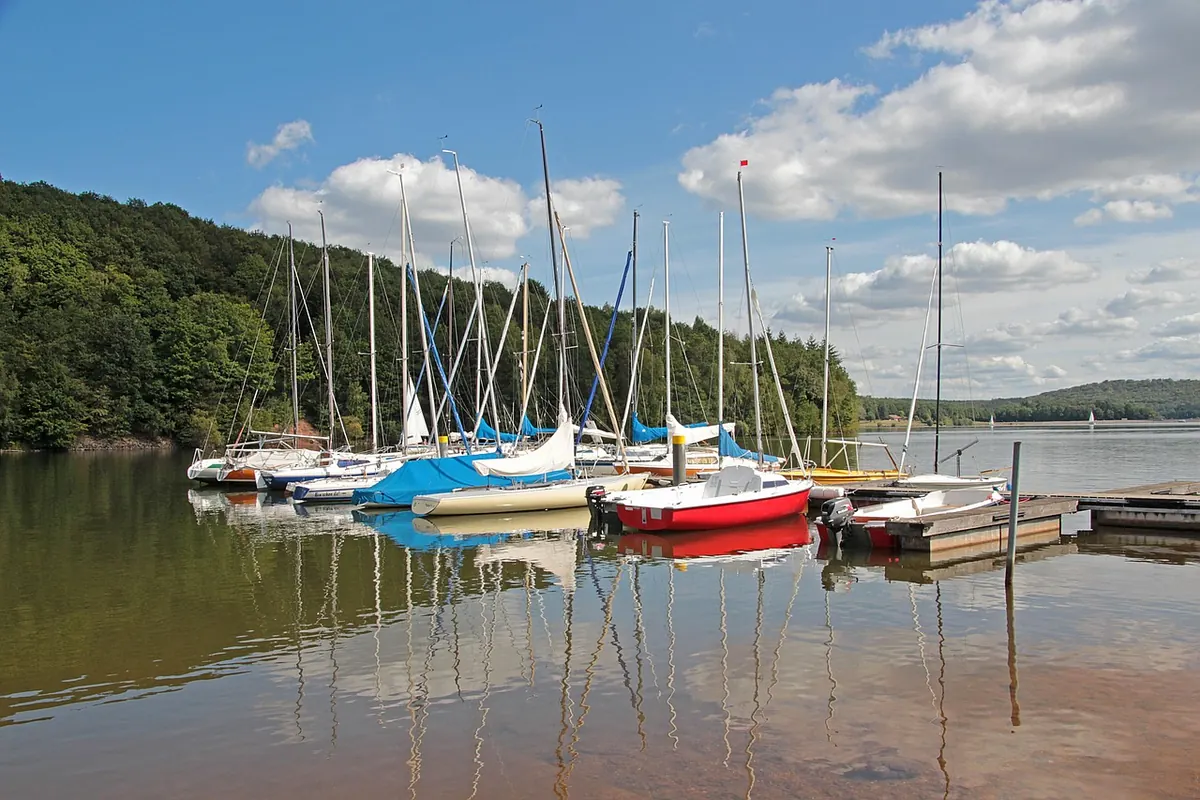
Photo: GuentherDillingen / Pixabay
Related posts
More stories you’ll love reading